

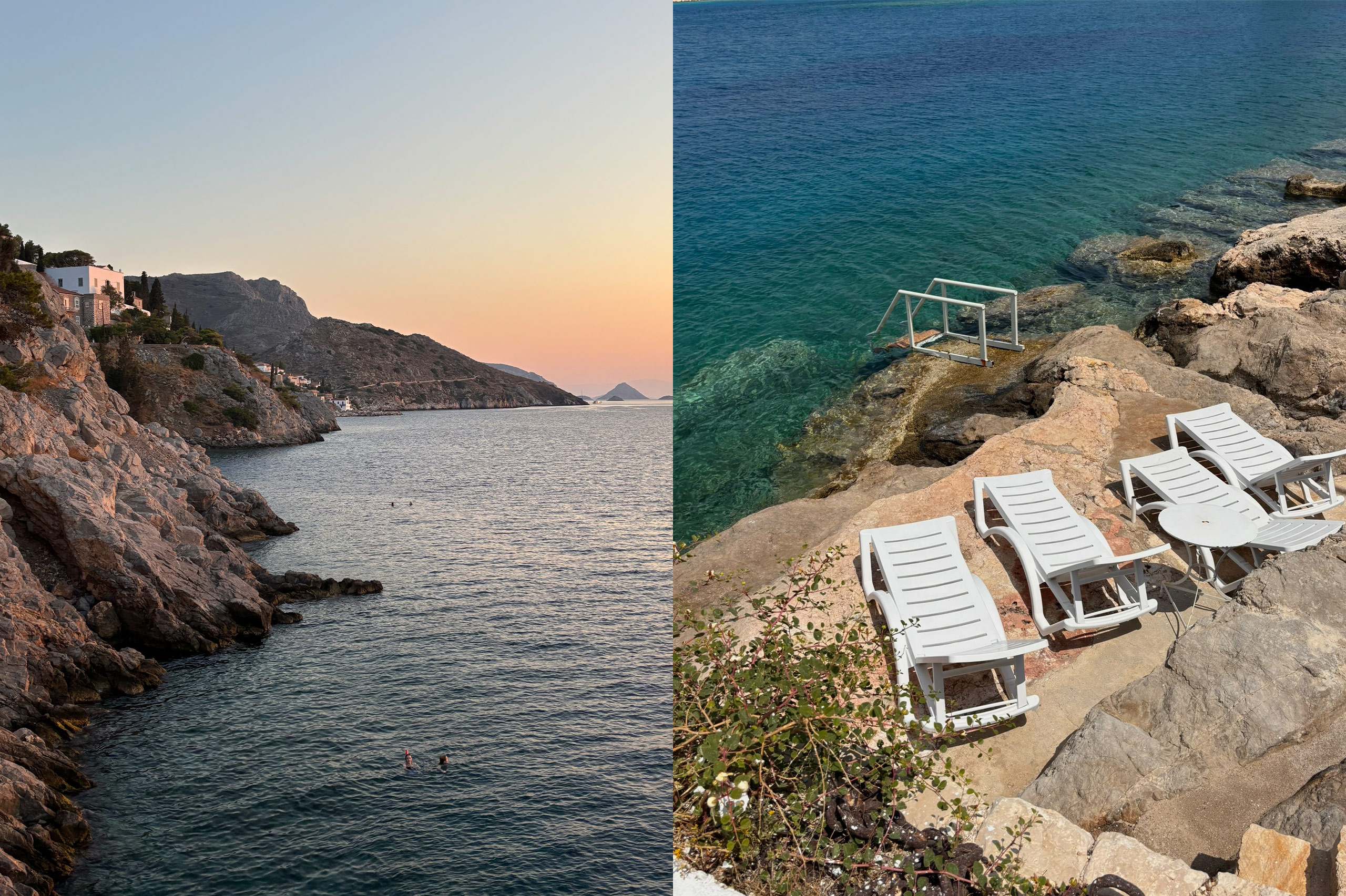
A friend’s birthday in Crete a few years ago proved to be the gateway trip to my lifelong obsession with the Greek islands. I’d only ever visited heavyweight party islands like Corfu and Ios as a late teen – booze cruises and late-night gyros hardly count – and upon returning to Europe to live in 2019, I momentarily forgot there was a world outside Italy to explore in the summer months. I’ve since realised the error of my ways.
The Greek islands have all the makings of a perfect holiday: crystal-clear blue waters; quaint villages; hikes through ruggedly beautiful nature; perfectly simple, fresh food; crisp house wine sold at tavernas by the kilo and only marginally more expensive than water; and tanned elderly inhabitants who congregate in shaded town squares to swap stories in the afternoon heat. Not to mention the heavenly trifecta that is an early morning swim, spanakopita and a freddo cappuccino.
Each island is different, and collectively, they have a way of luring you back, summer after summer, the months spent ferrying between islands piling up, monopolising holiday leave and leaving little room for exploration elsewhere. The true earthly joy is watching the steel ramp of a Blue Star ferry lower before being herded off in a manner befitting live cattle, to check into whichever Yiayia-run Airbnb or boutique hotel most lured you in.
Below, the islands that deserve your attention and your appetite…
1. Lipsi, Dodecanese

Lipsi is, more than almost anywhere else in the Dodecanese, an island for castaways: from the moment you step off the ferry, it’s as if you’ve time-travelled back to the 1970s and have absolutely no intention of returning. The pint-sized island sits between Patmos and Leros, the island ancient mythology claimed as the home of Calypso, the nymph who kept Odysseus beached here for seven years. Once you’ve visited, you’ll understand the delay.
While those inclined to walk could get by without a car, hiring one means glorious days spent beach-hopping at a whim. So relaxed were the roads that my dad gave me my first manual driving lesson there – about fifteen years later than most Australian kids learn – on the way to Platis Gialos, where I was free to chug and stall without incident, save for a flock of sheep being herded to the seaside. The quintessential Greek beach days await on Lipsi: flop and drop under a tree, swim up an appetite, and eat a perfect taverna meal before retiring back to your towel to nap the day away, my favourites being Platis Gialos Restaurant and Dilaila Restaurant. The latter is owned by a charming man who, on my mum’s birthday, brought out cake and sang her into her sixty-third year, plying us with wine until the afternoon blurred pleasantly at the edges. For a palette cleanse between tavernas, Gyros Lipsi turns out some of the most succulent chicken in the whole of Greece: crispy on the outside, juicy on the inside, perfectly sandwiched between golden fries and sweet tomatoes. Come evening, Ouzo Asprakis in the tiny harbour, with its colourful chairs and tables, and octopus strung up to dry, is the place to be. We stayed at Aegean Muses, perched above the harbour with views out to cotton-candy evening skies and a protected cove below whose calm, crystal-clear water is made for early morning laps.
To eat: Platis Gialos Restaurant; Dilaila Restaurant; Gyros Lipsi; Ouzo Asprakis
To swim: Lientoú Beach; Kimisi Beach; Platis Gialos; Katsadia; Papantria; Tourkomnima Beach; Kambos
To do: Walk from the harbour over to Tourkomnima Beach where you’ll pass vineyards and a family of donkeys; drive around the entire island and marvel at its beautifully-formed churches; stroll through Lipsi town
To stay: Aegean Muses
2. Paxos, Ionian

Paxos is where my ambitions to become a sailor materialised. A hop, skip and a jump from popular Corfu, the Ionian islands are spared from the Meltemi winds, making them the ideal place to set sail – the harbours of Gáïos and Longós are lined with sailboats and yachts to prove it, their owners providing some of the best people-watching in the Ionians. It’s a small island, crossable by car in twenty minutes, but it earns its reputation. Over 300,000 ancient olive trees cover the interior, their gnarled trunks the same ones whose oil kept Venetian lanterns burning from the 14th to the 18th centuries.
We split our time between the main port of Gáïos and Longós, where we’d invariably end up playing cards of an evening at Le Rocher Bar, making our way through the impeccabl e cocktail list at this century-old stone bar right on the water. Boulokos restaurant, with its sprawling terrace, is good for dinner after you’ve watched the sun go down on the beach. Keep walking around the coast and you’ll reach Marmari beach, and further still, Kipos beach; both pebbled, both shaded naturally by the trees. Pure bliss.
No visit to Paxos is complete without a boat trip to its tiny sister island, Antipaxos, whose waters are a shade of turquoise so vivid and so clear they could pass for the Caribbean. We ate at Bella Vista, up on the hill, and spent the rest of the afternoon horizontal on Voutoumi Beach.
To eat: Boulokos; Bella Vista (Antipaxos), Dolos Taverna, Vassilis Restaurant
To drink: Le Rocher Bar, Porto Vecchio
To swim: Marmari Beach; Kipos Beach; Voutoumi Beach (Antipaxos), Avlaki Beach, Plakes Beach
To do: boat trip to Antipaxos; walk the coastal path; explore the olive groves
To stay: Zakspitaki, Scott Williams Villas
3. Kastellorizo, Dodecanese

Kastellorizo is the only island in Greece I’d consider gatekeeping, both to keep it to myself like a little jewel in my palm, and because one of its inhabitants, a young French woman, told me: “When people ask where to go in Greece, you say Santorini, Mykonos.” If asked, you didn’t hear it from me.
My advice is to spend a night in Rhodes on your way over, staying at the family-run Marco Polo Mansion – a beautifully restored 500-year-old Ottoman residence tucked into the heart of Rhodes Old Town, brought back to life by Italian artist Giuseppe Sala and the ineffable Efi Dede, who runs it alongside her husband Spiros and their son Savvy, who oversees the wine at their citrus-shaded courtyard restaurant. It has slowly become my happy place. Kastellorizo is two hours further, and worth every minute of it.
Kastellorizo is the easternmost edge of Greece, closer to Turkey than Athens, and sitting on the ferry as it rounds the rocks and the island comes into view, you understand immediately why it’s been kept secret, and why the journey to get here is worth every hour. Small and perfectly formed, it has one main harbour, a handful of tavernas, and steep stone steps climbing into oregano-scented hills. Neoclassical houses line the waterfront in sun-washed pastels – the proximity to Turkey visible everywhere, from the architecture to the food – while colourful fishing boats dock metres from where you eat dinner. In the morning, the catch is cleaned on the quay; by night, it’s grilled whole and served with lemon and olive oil at tables by the sea.
Each morning begins with coffee at Mourayio before wandering past Billy’s, where the restaurant’s namesake can be found cleaning fish on the quay. Come back at lunch: the seafood and vegetable skewers are my favourite thing to order, though the meats hold their own too, with sardines, roasted eggplant and tomato, tzatziki and spinach balls rounding out a table you’ll be reluctant to leave. At Deli Mediterraneo, try the strapatsada and freddo espresso, which is whipped to perfection. For dinner, go to Ta Platania in the square under the trees for stuffed onion, goat and tiny prawns with rice, or Lazarakis when you want harbour views. Casa Mediterraneo – designed by Parisian architect Marie Rivalant alongside Grégoire Du Pasquier and Luc Jejeune, who brought a trio of neoclassical buildings back to life in sunbaked shades of ochre, terracotta, and olive green – is where to stay, or rent one of the Airbnbs nearby, like The Captain’s House, owned by Luc, and Casa Rossa. Nights generally end at Stratos or Aquarium on the harbour.
It’s almost redundant to give tips beyond that: the island is tiny, and the best of it reveals itself at your own pace. Hike up to the monastery, find your favourite rocky outlet to swim, promenade the harbour streets of an evening. Take a boat trip to the Blue Grotto. Swim at Mandraki or hop across to St. George, a rocky islet with a taverna and some of the best swimming going. On Fridays, catch the twenty-minute ferry to Kaş in Turkey for the bustling food markets.
To eat: Billy’s; Ta Platania; Lazarakis; Deli Mediterraneo
To drink: Stratos Bar; Mourayio
To swim: Mandraki; St. George islet; Blue Grotto (by boat)
To do: Hike to the monastery; ferry to Kaş, Turkey (Fridays); visit the museum; spot the harbour turtles
To stay: La Casa Rossa; Casa Mediterraneo; The Captain’s House (Airbnb)
En route: Marco Polo Mansion, Rhodes Old Town

I’d wanted to visit Hydra ever since reading Polly Samson’s A Theatre for Dreamers, her novel set on the island during the bohemian 1960s when Leonard Cohen was among the artists who washed up here and, in his case, stayed. Some people had warned me the island was “done”, but I’m glad I ignored them. Cars have been banned for decades, enshrined in local legislation, and the absence of engines gives the island a sense of calm you feel deep in your cells within ten minutes of arriving. The merchant families who bankrolled the Greek War of Independence built their wealth into the grand neoclassical mansions that still amphitheatre the harbour, and Hydra has been drawing artists, writers, and people in need of a long exhale ever since.
I was in the mood to hike on Hydra, and the island didn’t disappoint. It’s one way to lose the crowds entirely. The trails empty out fast, and my only company were paddocked horses and donkeys, the latter of whom I began chatting to as I descended into July heat hallucinations. The reward at the top is Prophet Elias Monastery, with sweeping views that make the climb feel like an undercharge. I wasn’t going to miss the Jeff Koons Apollo installation at sunrise either, so on went the 6am alarm and a scuttle along the coastline to a view that quite literally stopped me in my tracks. Again, I had it entirely to myself.
Who needs a beach when you’ve got Hydra’s fabled rocky cliffside swimming? The sea here is completely mesmerising, an impossible, oil-slick shade of blue that sparkles under the Aegean sun. Spilia Beach Bar is chic as hell: enjoy your morning coffee, then dive straight from the rocks into deep water and do laps before tucking into a caesar salad for lunch. Come sunset, Hydronetta Cocktail Bar is pure magic. Order a negroni and alternate sipping and swimming off the rocky platform below, staying in the water as the sun dips. This is maybe the closest I’ve come to a spiritual awakening.
A tip from Sophie McComas of Buffet Digital led me to Ostria, a charming taverna back from the port, for a solo birthday dinner. She was right: the meatballs were juicy, and Tassoula, the owner, lives up to her reputation for telling it exactly as it is. While (thankfully) kind to me, she entered a screaming match with hopeful walk-ins that culminated in her threatening to call the police when they sat to dine next door. Talk about dinner and a show! For grilled fish and horta with generous squeezes of lemon, head to Taverna Marina for lunch. For a delicious reprieve from Greek food, go to the elegant Il Casta for perfectly al dente pasta. The Pirate Bar deserves your patronage for a late afternoon drink and some of the best people-watching on the harbour.
To eat: Ostria Restaurant; Taverna Marina; Il Casta; Xeri Elia (Douskos)
To drink: Hydronetta Cocktail Bar; The Pirate Bar; Spilia Beach Bar
To swim: Avlaki Beach; Hydronetta rocks; Spilia
To do: Hike to Prophet Elias Monastery; visit Jeff Koons Apollo at the Deste Foundation; walk the coastal path to Kamini and Vlychos
To stay: Bratsera; Hotel Miranda
5. Ithaca, Ionian

Ithaca has been famous for three thousand years, which is quite a head start on the rest of this list. Odysseus spent a decade trying to get home to it, and while I wouldn’t recommend that particular itinerary, I understand the impulse. The island is green, mountainous, and astonishingly beautiful – a world away from the sandy, sun-bleached Cycladic aesthetic. Ancient trails crisscross the hills, leading to sites steeped in mythology: the Cave of the Nymphs, where legend holds that Odysseus hid treasures on his return; the coastline near Stavros, pretty enough to make the decade away make sense; and the whitewashed village of Perahori, set among fig trees on the edge of the Afentikos Logos forest with views across the entire island.
We stayed at Ionian Breeze, an elegant studio above Afales bay with dramatic coastal views, a fully equipped kitchen (that actually got used), and cats who greeted us at the door each morning. The owner, Christina, leaves local wine, beer and cheese on arrival and has a recommendation for everything, from restaurants and beaches, to walking trails through the hills. We loved it so much we ended up cooking and eating in most nights, which on a Greek island trip is the highest possible compliment. When we did venture out, it was to Delicious – a low-key taverna that lives up to its name, grilled meats and Greek salad done exactly right – La Familia at the port, and Extraterrestrial Restaurant, a must-visit with otherworldly views and a locally inspired menu made almost entirely from their own produce; the spinach and feta pie and the salad of the day are not to be missed. Be sure to book.
The road into Marmagkes Bay is, to put it lightly, hair-raising, so I’d recommend either hiking or going by water taxi from Frikes instead. The beach, with its white marble pebbles and views out to the little chapel of Agios Nikolaos on the islet in the bay, is worth it alone, but the cherry on top is the charming family-run canteen serving gemista baked in a traditional wood-fire oven, fried calamari, grilled prawns and meats, and freshly-caught fish, all served on paper plates alongside ice-cold beers. Filiatro, Sarakiniko, Kourvoulia and Aspros Gialos are the other beaches to know, the latter with views across to Kefalonia on the horizon.
To eat: Delicious; La Familia; Extraterrestrial Restaurant; Ageri; Kirki Taverna; Marmagkes Kantina
To swim: Marmagkes Bay (by boat from Frikes); Sarakiniko; Filiatro; Platia Ammos (by boat only); Yidaki (taxi boat or hike); Kourvoulia; Aspros Gialos
To do: Walk the trails through the Afentikos Logos forest; visit the Cave of the Nymphs; wander Perahori village; Archaeological Museum, Vathy
To stay: Ionian Breeze
6. Sifnos, Cyclades

Sifnos was one of the first islands I visited and one of the few I’m willing to break my ‘no-return’ policy for. (There are 227 inhabited Greek islands to see in this life, I can’t be wasting time.) At the time of writing, I’ve visited four summers in a row, and will be returning in early October for our NOMS Ways of Feasting food and wine retreat, hosted alongside sommelier and anthropologist Nikolina Skenderija, who I met a few years ago at Cantina, where she works as head sommelier, and Greek chef Konstantina, also Cantina alumni. (More on that soon).
The culinary gem of the Cyclades, Sifnos is known as much for its flavourful and innovative take on traditional Greek cuisine as it is for its classic Cycladic architecture and rugged natural beauty. Local chef Nicholas Tselementes is chiefly responsible for the island’s foodie reputation, having returned from upscale kitchens in New York and Vienna to write Greece’s first cookbook in 1910. Cantina, Omega-3, Bostani Bar & Restaurant, Pelicanos and Nus epitomise this experimental take on Greek food, while To Steki and Captain George offer more classic taverna fare right on the water. Cafe Mosaic sits somewhere between the two – unhurried, easy, the kind of place you end up staying longer than planned. Loggia Bar is the place to be come sunset, where they pour the best in Greek natural wines with a spectacular view; if you can’t get a table or find yourself unwilling to queue, hand-mixed mojitos for five euros at Kavos Sunrise next door will do just fine, or head into Apollonia for the perfect Paloma at Botzi 93 Sifnos. Don’t leave the island without trying revitháda – baked chickpeas, a Sifniot staple traditionally cooked overnight in communal ovens each Saturday to fill hungry bellies after church the next day.
If you can drag yourself away from the table, there’s plenty of swimming to be done. Sifnos is where my niche bathing preferences were born: jumping off smooth, flat rocks into impossibly deep azure blue waters with a whitewashed, blue-domed chapel in the background. There are 360 churches on Sifnos, one of the island’s nine taxi drivers tells us – the best ones to swim next to are Chrisopigi, Seven Martyrs and Panagia Poulati. Cheronissos and Faros are standout beaches if sandy dips are more your style, both ideal for a full day of flopping and dropping thanks to their beachfront tavernas. Before you leave, make time for Loumidis Farm, where farmer Ioannis and his family welcome visitors to hold baby animals, milk goats, feed cows, and learn about the centuries-old, no-water farming philosophy he still practises today. And stop into Atsonios Ceramics in Vathi to pick up a souvenir, or have a turn on the wheel.
To eat: Cantina Sifnos; Omega-3; Bostani Bar & Restaurant; Pelicanos; Nus; To Steki; Captain George; Cafe Mosaic; Restaurant Chrisopigi Lempesis
To drink: Loggia Bar; Kavos Sunrise; Botzi 93 Sifnos
To swim: Chrisopigi; Seven Martyrs; Panagia Poulati; Cheronissos; Faros
To do: Visit Loumidis Farm; Atsonios Ceramics, Vathi; walk from Platis Gialos to Kastro
To stay: Verina Astra; Themonies Sifnos; Nos Hotel & Villas
7. Leros, Dodecanese

Part of the fun (and at times, frustrations) of island-hopping in Greece is navigating the jigsaw puzzle that is the ferry system. That is how friends and I found ourselves on Leros, a tiny island in the Dodecanese, geographically closer to Turkey than it is mainland Greece, and architecturally more like Italy than its neighbouring islands. It’s a short 45-minute ferry ride from Patmos, from where we’d just come, and Kalymnos island is so close you could almost reach out and touch it. Leros feels like a world away from both.
The island has its fair share of lively local tavernas, most of which are located at Panteli Beach and offer feet-in-the-sand dining, however the culinary pièce de résistance is the family-owned Mylos Fish Restaurant & Terrace Bar. Eating here merits a visit to the island itself alone. Run by two brothers, the restaurant serves up an elevated take on taverna food and overlooks the calm blue waters of the Aegean sea, a photogenic windmill vying for attention in the foreground. Book an early seating and you’ll be rewarded with astonishing sunset views. Overlapping shades of dusty pinks and violent oranges appear as if exploding across the horizon; take them in as you feast on fish so fresh you probably shared a swim with that afternoon. The island’s Italian influence is best showcased in the restaurant’s spaghetti alla bottarga.
Leros is also home to Agia Marina, one of the most picturesque and remote beaches in the Greek islands. The path to the beach succumbed to a landslide a few years back, so unless you’re a fan of forging your own track through spiky shrubs and over cliff faces under the scorching Mediterranean sun, the best way to get there is to catch a boat from the nearby Dios Liskaria. The captain speaks zero English yet exudes buckets of charm. Important to know on a practical level: he also mans the grill at Restaurant Vareladiko, and so shouldn’t be relied upon too strictly to collect you at the agreed return time in case his services are required elsewhere. We weren’t phased by the extra hour or so that we spent on the beach waiting for him to finish the mid-afternoon rush – it truly is paradise – but good to keep in mind when packing snacks, water, and, most crucially, sunscreen (there’s barely any shade on the beach).
To eat: Mylos Fish Restaurant & Terrace Bar; Prima Plora; StisAnnas; Artemis Taverna; Ta Kroupia
To drink: Harris Bar; Zephyros
To swim: Agia Marina; Panteli Beach; Paralia Agia Kioura;
To do: Hire a quad bike and zip around the entire island, exploring unmarked beaches as you go; Walk up to the Windmills Pandeli from Panteli Beach; Learn about the complicated history from a local
To stay: Archontiko Angelou
8. Amorgos, Cyclades
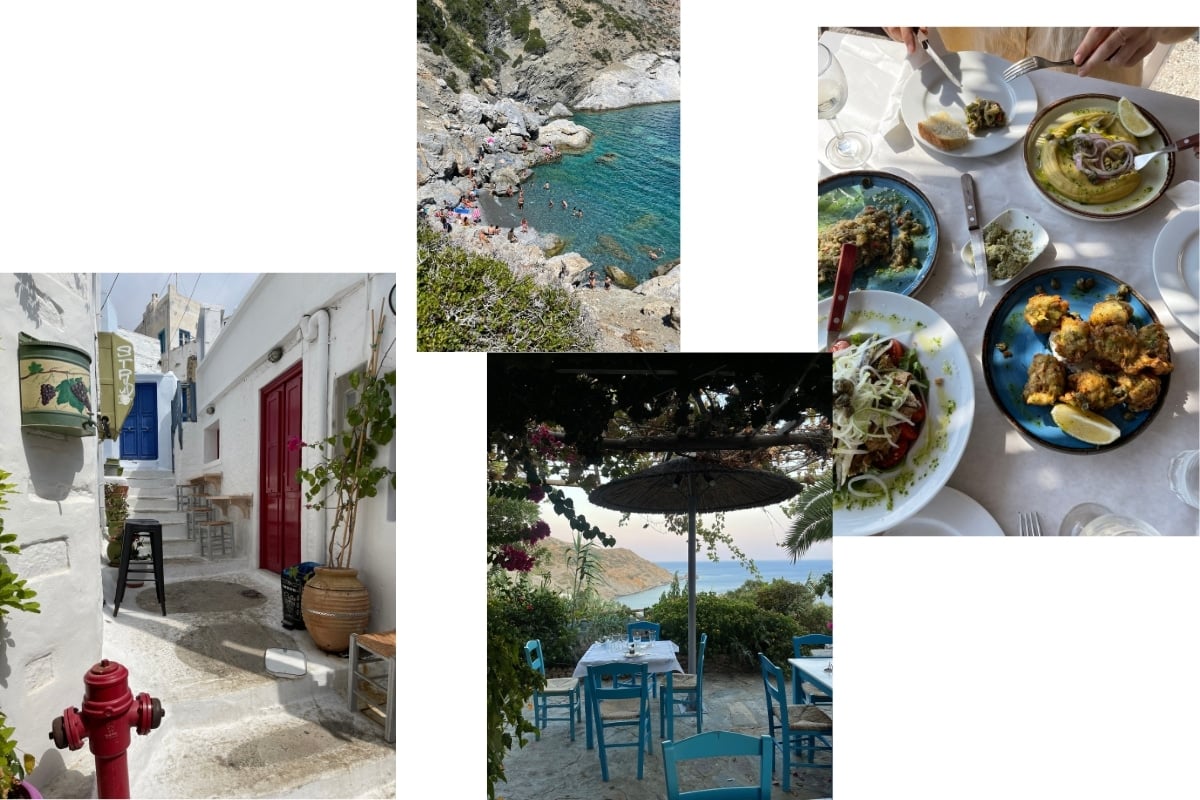
Amorgos has a special energy, with its rugged mountain peaks and untouched authenticity. Its magic lies in the combination of wild elemental beauty, including many perfect swim spots (refer to above preferences), and bohemian-chic atmosphere, from the bustling Chora to the tree-shaded bars of Paralia Egiali. It’s the perfect island for naturists with a hearty appetite for good food and adventure.
When I visited in 2022, friends and I decided to split our 10-day stay between two areas, slicing up the island into two mini trips so we could see as much as possible without spending too much time on the road. I was clearly feeling brave when booking the first Airbnb: a barebones dwelling in the tiny town of Vroutsi, home to only a handful of residents and a sickly donkey who would welcome each new day with laboured grunts at the base of my bedroom window. Spontaneity and a sense of discovery are hard to come by in the Instagram and TikTok-era of travel, yet this is exactly what we found in the anachronistic Vroutsi, where the slow rhythms of village life are on full display – from YiaYia’s shelling beans on their porch of an evening to the tribe of shaggy goats we’d encounter on our ambles down to Ancient Arkesini. It was unanimously agreed by all that the town’s mini market-slash-restaurant turns out the best hot chips in the world. (On reflection, it is possible that our judgement was impaired by the litres of house white wine we consumed during the 1.5 hour wait for them to arrive). Our second hotel, Pano Gitonia, was perched above Paralia Egiali beach, offering incredible value for money, charming interiors, and sweeping views out to neighbouring Donousa, best appreciated over sunset beers and oregano-flavoured chips.
To eat: Tranzistoraki; Mouros Taverna; Moschoudaki Cafe Restaurant; Limani Restaurant; Prekas
To drink: Botilia; Jazzmin; Seladi; Disco The Que
To swim: Agia Anna Beach; Mouros Beach; Nisida Gramvousa (You can catch a boat over from Kalotaritissa Beach); Nikouria Beach
To do: Hike! (The island is a hiker’s paradise with well-marked paths, our favourite walk was from Paralia Egiali to Stavros Holy Church); Hire a quad bike and beach hop, making sure to check out the Shipwreck of Olympia; Walk to the beautiful 10th-century cliffside Panagia Hozoviotissa Monastery; Sip on a freddo under the dappled shade of a tree in the Chora
To stay: Pano Gitonia; Vorina Ktismata
9. Astypalea, Dodecanese

Astypalea, known as the ‘Butterfly of the Aegean’, is an alluring mix of rugged remoteness and low-key elegance. Here, mountains are strewn with wild saffron, decision-making is reduced to whether to pick lobster spaghetti or grilled fish for dinner (why not both!) and nights tend to culminate with a cocktail in one of the winding, cobblestone alleyways of the Chora. When I visited, each day on the island would begin with a swim and coffee at Paralia Livadi (or the nudist Tzanaki Beach if we were willing to venture a bit further), before a steep climb back up to our hotel, Kalderimi Traditional Houses, for a delicious homemade breakfast with local baked treats and the kind of expansive sapphire blue views I mentally return to during the long winter months in Amsterdam. Within easy walking distance of both Livadi Beach and the Chora, the family-run hotel is the perfect base for laidback days spent exploring the island, and the embodiment of quintessential Greek hospitality: generous, friendly and warm.
If you’re travelling with a willing and fearless driver, hire a 4×4 and take the treacherous track down to Kaminakia – you’ll be compensated with a picturesque pebble bay, its gin-clear waters flanked on either side by dramatic cliffs. An ideal spot for big leisurely swims and Aperol spritzes under the shade, and a sweet reminder that we’re all tiny specks in a big, beautiful world. If your nerves aren’t built of steel, Paralia Steno and Plakes are easier to reach and almost as lovely. One of my favourite things about the island is that on nearly all our walks and drives, the Chora would emerge from around each bend, its white-washed beauty made all the more striking when bathed in sunset hues.
To eat: Antikastro; Almyra; Astifagia; Linda’s; Astropelos; Tásos
To drink: Apanemiá; Castro Bar
To swim: Kaminakia; Paralia Vatses; Paralia Livadi; Tzanaki Beach; Paralia Steno
To do: Wander around the shops in the Chora; Test your resolve driving to far-flung beaches; Take the ferry to neighbouring islands, Kounoupi and Koutsomiti
To stay: Kalderimi Traditional Houses; Saluti Da Stampalia
10. Syros, Cyclades

Syros is both the capital of, and an anomaly among, the Cyclades – he ideal spot for those seeking a change from the traditional white-and-blue architecture characteristic of the island group. Arriving by ferry into the 19th-century city of Ermoupoli, you’ll instead be greeted with colourful, neoclassical buildings, palatial mansions and marble piazzas. Referred to as the Queen of the Cyclades, the town owes its grandeur to a wealthy trading past, having once rivalled Athens in international maritime commerce. These days, the history-rich island is home to an artistic crowd, with Aristide Hotel at the centre of it all. Take a break from soaking up all the culture with a dip at the urban Asteria Beach, followed by a cocktail on the hotel’s rooftop or at Theosis Bar. The latter is located in Ana Syros, a quaint, cobbled-together village perched high up on the hill behind Hermoupolis.
I split my time between Ermoupoli and Kini Beach. The best beaches on the island require an easy hike to get to, my favourite were Delfini and Paralia Armesos. There’s a few notable sights to be seen on the island – the Town Hall, the Apollo Theatre (a replica of Milan’s La Scala), San George’s Cathedral – but if I’m being real with myself, long taverna lunches are my preferred way to pass the day. Achladi Restaurant is the place to go if you want to eat right on the water, with resident ducks and geese in concert with the waiter, waddling between tables and being shooed back into the shallow water as you feast. Allou Yallou at Kini Beach offers more upmarket Greek fare with spectacular views. For something low-key, the taverna next door, whose name translates to ‘two cicadas on the tamarisk tree’, features all the classics, cooked to perfection.
To eat: Achladi Restaurant; Dyo Tzitzikia Sta Armyrikia; Allou Yialou; Ousyra; Laoutari Kafreneio; Plakostroto; Mazi
To drink: Aristide Hotel; Theosis Bar
To swim: Paralia Delfini; Paralia Armesos; Kini Beach
To do: Try local sweets like Loukoumi (Turkish Delight); Beat the heat with a gelato at Django Gelato Syros; Wander around Ano Syros and Vapori; Pick up a jar of capers to take home
To stay: Aristide Hotel; Syrou Lotos Apartments
11. Patmos, Dodecanese

Patmos is the holy island that attracts the Paris Fashion Week crowd in droves. Each country seems to favour a different island – Rhodes is full of German visitors, the British don’t mind a bit of Thessaloniki – but in this tiny, spiritual island, where John the Apostle wrote the Book of Revelations, it’s chic Parisians who reign supreme. No more apparent is this than in the main square of the Chora in August, where well-dressed, well-heeled visitors smoke cigarettes, drink cocktails and (I can only assume) gossip the night away. We were happy to discover the island’s je ne sais quoi can be enjoyed by non-French tourists, too.
Having forgotten to book a car in advance and arriving on the island to discover they were prohibitively expensive to hire, we were at the mercy of taxis during our stay. Honestly, I recommend it. Of the 12 drivers on the island, we never encountered the same one twice, and they were all excellent conversationalists who imparted historical knowledge and helpful tips onto us. They also all drove to varying degrees of lunacy that made us glad not to be braving the roads ourselves. One such hair-raising Patmos Drift adventure saw us hurtling towards Paralia Kampos, where we spent the day swimming and sipping on freddo’s, before walking inland to Ela!, a farm-to-table restaurant in a stunning setting, which serves local and imported natural wines. Despite only being a 15-minute walk, we saw both a man machete his way through a field, and hundreds of goats being herded up a mountain by a farmer in traditional dress. Also of note on the island: the 30-minute hike to Psili Ammos is absolutely worth it for a swim in the turquoise waters and a long lunch at the beachfront taverna.
To eat: Livadi Geranou; Psili Ammos Greek Tavern; Benetos; Ela!; Giagko’s Pantheon; Ktima Petra; Trehantiri Taverna
To drink: To Thalami; Astivi; Oklacà Restaurant & Bar (not the best service, but the best spot to watch the sunset)
To swim: Petra Beach; Paralia Vagia; Livadi Beach; Paralia Didimes; Psili Ammos
To do: Get lost in the labyrinth-like streets of Chora; Swim out to Agios Georgis church from Livadi; Watch the sun go down from Paralia Skala
To stay: Pagostas
12. Small Cyclades
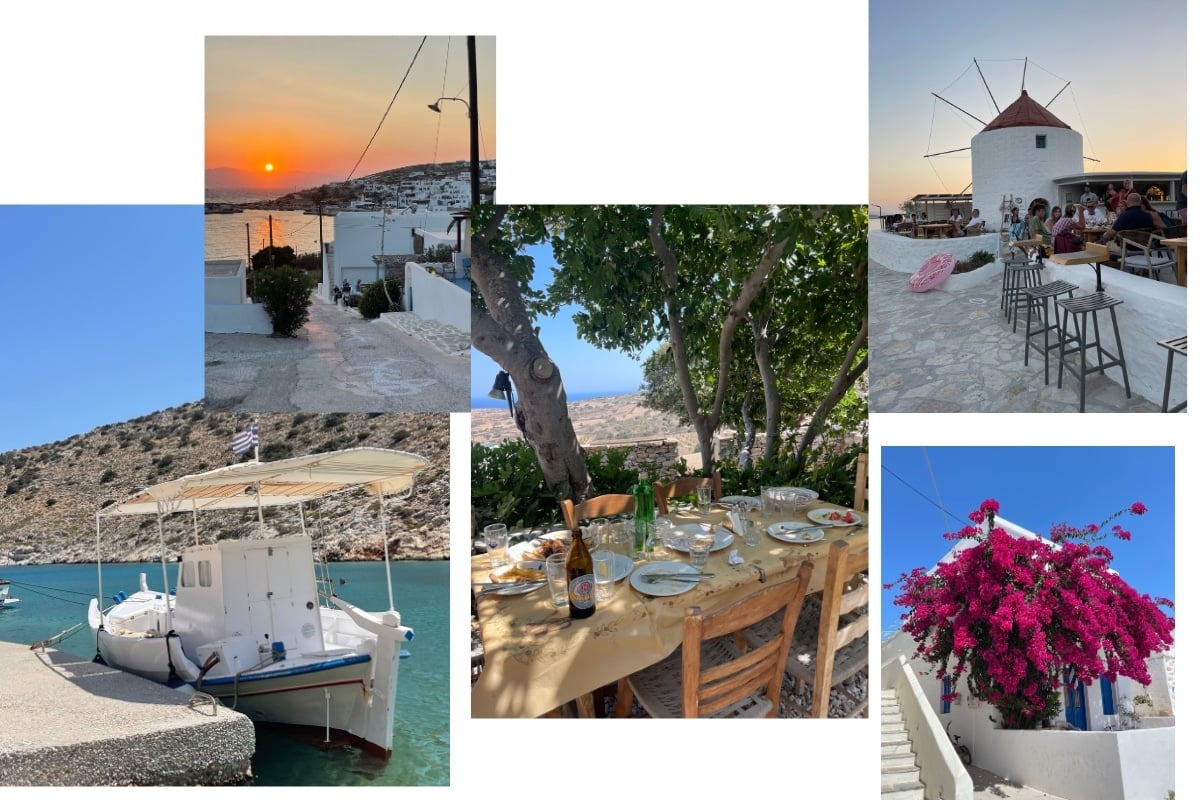
The Small Cyclades comprises four islands, three of which I visited and loved – Donousa, Koufonisia and Iraklia – so you’re really getting fourteen islands for the price of twelve with this guide. While each has their own unique character and charm, their compact size and close proximity to each other make them the perfect trio to visit in one go, especially if you’re a laid-back, low-maintenance traveller with a sense of adventure.
Koufonisia is the most touristic of the three – the island seems to bend to the rhythm of visitors, rather than the other way round. The trade off is really fun sunset bars (our favourite was Sorokos Bar) and boat taxi rides to far-flung beaches (like the neighbouring Kato Koufonisi, where I’d advise you skip the taverna and head straight to Nero beach where the free-roaming goats will try to steal your packed spanakopita lunch, which you will have purchased earlier that day from Bakery Giorgoula). The sea in Koufonisia is crystal clear, with my top swim spots being Paralia Finika, Paralia Italida and Paralia Pori.
From the moment we set foot on Donoussa, the island gives and gives. Loukas, the owner of Makares Donoussa, is there to pick us up from the ferry, taking us to our simple yet elegant accommodation that is so decently-priced we almost feel as if we’re ripping him off. The walk from the hotel to Kedros beach at sunset so beautiful that my jaw quite literally drops. Even though it’s hard to peel yourself away from the main beach, where you can swim out to the horizon or walk up to Yucca for your third coffee of the day, I recommend jumping on a boat to Seal Cove, with its brilliant blue water and technicolour coral, or taking the bus in the direction of Kalotaritissa Beach. There, you have the option of three insanely beautiful bays and the perfect Taverna Mitsos for lunch. After eating simple taverna fare for a month straight, the upmarket ambience and food at Avlidonoussa restaurant near the port makes for a memorable dinner. I probably drink more than I should on Donousa, but it’s hardly my fault when places like Kedros beach bar exist.
Iraklia feels like going back in time. True happiness is bumping around the island on the public minibus: up to I Drosia for lunch, over to Tourkopigado Beach for a swim, and back to the port town, where ordering one of everything off the menu at Akathi Restaurant feels like the only acceptable way to spend an evening. The tiny island is home to only 148 locals, some of whom appear as recurring characters on our holiday. There’s the Adonis-like figure jumping on the back of a garbage truck while we set out for a run in the morning, later to be spotted swimming at Livadi Beach with his daughter, and then again sipping on a beer at an evening concert in the town’s square. The priest we see in the church courtyard one morning, and then again blessing a cafè near the port the next day. The elderly couple drying figs on their balcony as the sun melts into the horizon in the background. I often fantasise about packing it all in and moving here to document the romantic minutiae of the inhabitants’ day-to-day lives. If you can’t find me, now you know where to look.
To eat: Mixalios Grill House & Finikas in Koufonisia; Avlidonoussa, Taverna Mitsos & Agnanti in Donoussa; Akathi Restaurant & I Drosia in Iraklia
To drink: Sorokos & Mylos in Koufonisia; Kedros Beach Bar & Skantzoxoiros in Donoussa; En Lefko in Iraklia
To swim: Paralia Finika, Paralia Italida & Paralia Pori in Koufonisia; Livadi & Kalotaritissa in Donoussa; Tourkopigado & Livadi in Iraklia
To do: Relax into the slow yet sweet pace of life; Boat taxi to hard-to-reach beaches; Beat the crowds with early morning swims
To stay: Apollon in Koufonisia; Makares Apartments in Donoussa; Speires in Iraklia


