

In partnership with St-Germain
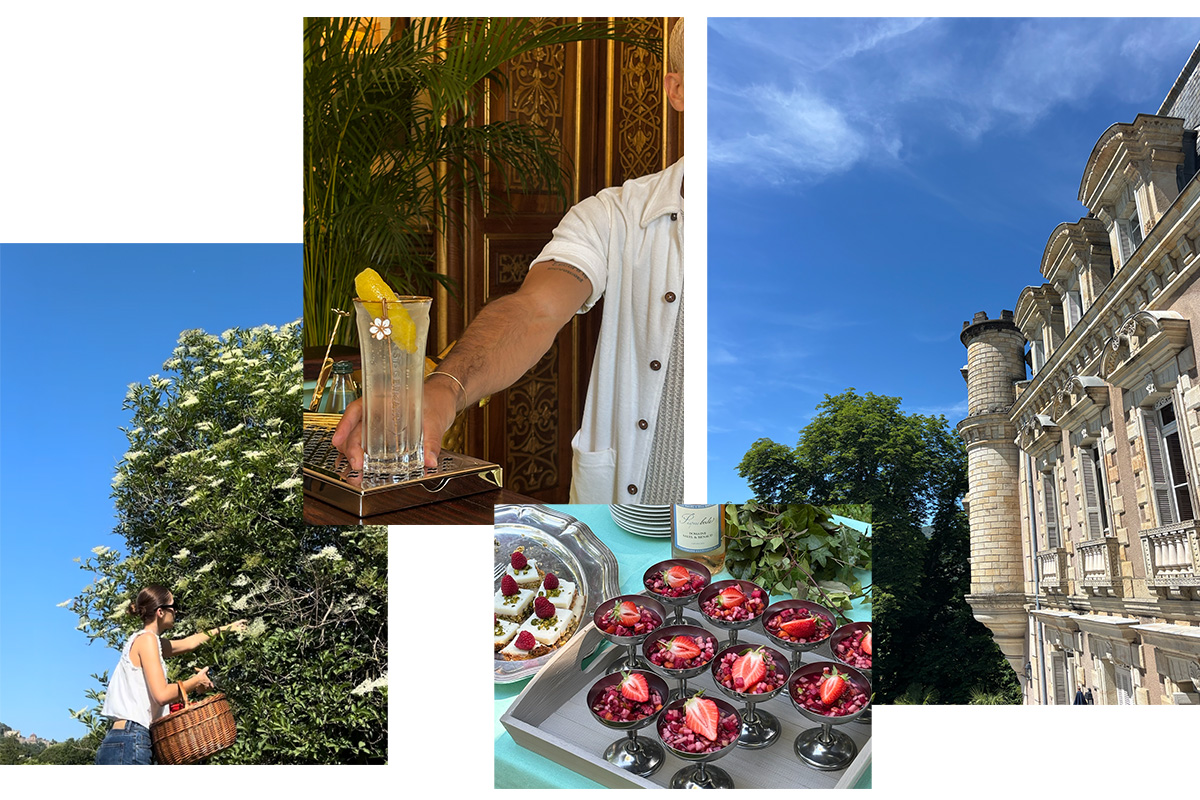
Arriving at Château Clément, a towering 19th century manor in the tiny town of Vals les Bains just a few hours south of Paris, you’d be forgiven for thinking you’d wound up on a movie set.
It’s virtually silent, save for a few birds chirping, perhaps someone splashing in the sun-soaked pool, or the sound of glasses clinking. The latter is a frequent and unsurprising chorus — after all, this is where St-Germain hosts guests every spring; a home base for the intricate harvest process that goes into every single bottle of its elderflower liqueur. Fittingly, I was hard pressed to find a moment during my stay when my hand wasn’t grasping a fresh St-Germain spritz, delicately adorned with edible flowers and a twist of lemon rind.
Over three days, I followed the path of the iconic liqueur from the streets of Saint-Germain-des-Prés to the wild elderflower blooms of southern Ardèche. Here’s what happened.
Day one
Our journey began in Paris — in the historic Saint-Germain-des-Prés region, to be exact. Like everything on our itinerary, this locale in the city’s 6th arrondissement was not selected by accident. It’s the area, made famous in the Belle Époque by the creative figures who frequented it, that first inspired distiller Robert J. Cooper to create St-Germain back in 2007. Over vegetable tarts and a St-Germain soaked brioche filled with (massive amounts of) chantilly cream, the tone was set for the days to come.

Nothing helps a long lunch digest quite like window shopping, and thankfully, there are no shortage of great shops to peruse in Paris. But our window was small — a sunset cruise along the Seine was calling our names. We were greeted, of course, with a St-Germain spritz on arrival, before setting sail past some of the city’s most iconic sites, from the Louvre to the Eiffel Tower.


Then it was onto our next appointment of the evening: a reservation at one of the city’s tiniest and most sought-after bars, Bar Nouveau. The venue has two distinct areas. Upstairs is lively and bustling, with classic Parisian architecture. Downstairs, meanwhile, feels sleek and sultry, centred around a large stainless-steel table cocooned by concrete walls and illuminated by a projection of shifting lights. Be warned — this is not your average aperitif. Our drinks were served in beautiful hand blown glasses, no two alike, and came accompanied by mouthfuls of food — perfectly balanced morsels of flavour, created to expertly compliment whatever it is you’re drinking.

The night culminated in dinner and a show at Boeuf Sur Le Toit — a classic French brasserie, with a twist. As plates arrive at each table, the lights dim and attention shifts to a glittering disco ball and a soulful live performance. You can settle into the atmosphere and watch it unfold or get up and sing along — both are equally encouraged.
Day two
I found myself onboard a two-hour train to Marseille, entranced as the Parisienne cityscape slowly gave way to rolling green hills hills. That lush horizon only grew more beautiful as we were bundled into cars and drove nearer our home for the next two nights: Château Clément.

Located on the edge of Provence in southern Ardèche, the property — once a family home — feels worlds away from reality. As we discovered throughout the first afternoon, there is plenty to do, including absolutely nothing at all, if that’s more your speed. Soaking up the late-spring sunshine by the pool, reading on the balcony, perhaps drawing a bath in your suite (mine was called Louise, after the owner’s daughter) — the options are endless.

Our only real agenda item was an aperitif at 7pm, perfectly timed for golden hour given how late the sun sets here. In French culture, the aperitif is a pre-dinner ritual designed to stimulate the appetite and encourage conversation, which we did over St-Germain Spritzes and tiny appetisers. Afterwards, we settled in for dinner, cooked on-site over a large fire pit. The aroma drifting into the dining room was all the indication we needed that it was time to feast.

Day three
Just a short drive from the Château delivered us to our harvest destination. While the word ‘harvest’ might conjure images of a traditional farm or even a winery, with rows of neatly cultivated plants, a St-Germain harvest is something else entirely. In essence, elderflowers bloom where they want to. Wild-grown trees burst into flower for just a few weeks every May, producing thousands of tiny white blossoms. The environmental conditions have to be just right and, even then, exactly when they bloom — and how abundantly — is largely left to chance.
Despite the randomness of it all, the harvest process itself is extremely meticulous. The flowers are hand-picked at the height of their bloom, with up to 1000 flowers required to create just a single bottle of St-Germain. Then, they must be transported to a processing facility almost immediately, so as to capture that delicately distinct flavour profile.
The maceration process is up next, and involves soaking the flowers to extract the flavour and aroma, and this needs to get underway within 24-hours. Once that’s done, the extract is left alone to allow natural separation to occur, then what’s left is filtered and blended with the remaining St-Germain ingredients.
After an in-depth demonstration of this process, we found ourselves back at the Château, grazing on lunch as we discussed what we’d learned. Then it was time to rest and recharge before coming back together for one final (but arguably the most important) lesson: how to make a St-Germain spritz.


Armed with our newly acquired bartending skills, we gathered for one last aperitif as golden hour settled over the Ardèche countryside — this time soundtracked by a surprise live music performance. Dinner followed shortly after, bringing the trip to a close around a long table filled with good food and a newfound appreciation for the craftsmanship behind every bottle of St-Germain.


